The problem with your favourite quote
It’s an eloquent little trap
If you work in strategic communications, you’ve seen it. You might have even used it.
It’s in LinkedIn profiles and Twitter bios. It smugly opens keynote speeches about organizational clarity. It graces the first slide of high-stakes strategy decks to shake up the C-Suite.
"The single biggest problem in communication is the illusion that it has taken place." — George Bernard Shaw
God damn do we love this quote. It feels so intuitively right.
It neatly sums up the universal struggle to communicate; how speaking isn't the same as being heard; how nobody’s really listening any more, we’re all just waiting for our turn to speak.
When you use it, you’re signaling: I get it. I embody meaningful connection. I see the invisible meaning. I hear you, I am listening.
But then there’s the beautiful irony about this illusory quote:
George Bernard Shaw almost certainly never said it.
The quote warns us about the "illusion" of communication, yet the quote itself is an illusion. The problem with this particular piece of communication, to paraphrase ‘Shaw’, is that it may not have taken place.
Yeah, it’s everywhere, but there is no primary record of Shaw writing or speaking these words. In most instances, there is no hard evidence of where it comes from at all. It’s just a ghost quote — a sentiment that drifted into collective consciousness and attached itself to a famous name, gaining irresistible momentum. Enough people have quoted it that it seems validated. Here’s a leadership coach. Here’s a global business expert. Here’s an author. Here’s the founder of a consultancy.
When you paste this quote into your bios or your decks or your blog posts without checking its provenance, you aren't demonstrating a profound grasp of communication, you’re embodying the very flaw the quote fingers, your own superficiality. We are prioritizing the feeling of truth over the work of seeking truth, tricking ourselves with our own illusion.
To the discerning reader, this doesn't signal wisdom. It signals that we haven't done our homework.
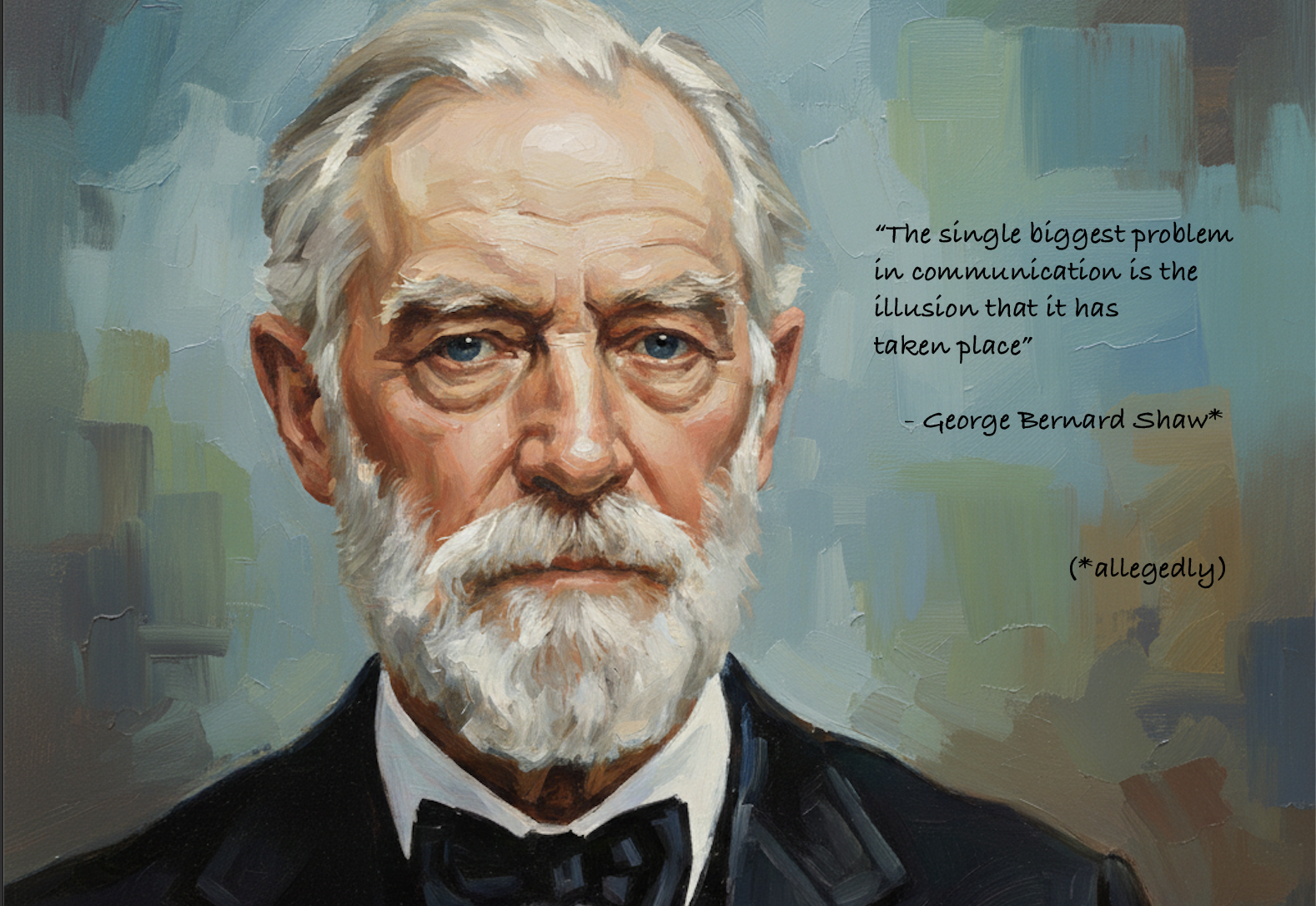
Not George. Not his quote.
So How’d We Get Here, George?
The closest we can come to finding the source of this quote is thanks to ‘Quote Investigator’, a hobby website run by former Johns Hopkins computer science professor Gregory F. Sullivan, who writes under the pseudonym Garson O’Toole. He points to a version of the quote published in a September 1950 Fortune article by a journalist called William H. Whyte. Sullivan did the legwork to verify it on microfiche. Shaw died, aged 94, two months after the article was printed.
From there, the quote is mangled through a few varieties, attributed to advertiser Pierre Martineau at one point, and it’s not until 1994 that Bill Creech – a retired four-star Air Force general with a long and fascinating career including a stint in the Thunderbirds and combat in Korea. General Creech attributes the quote to Shaw in his snappily-titled book “The Five Pillars of TQM: How to Make Total Quality Management Work for You”. Creech has also passed on, he died in 2003 so we can’t ask him how or why he saw fit to credit Shaw.
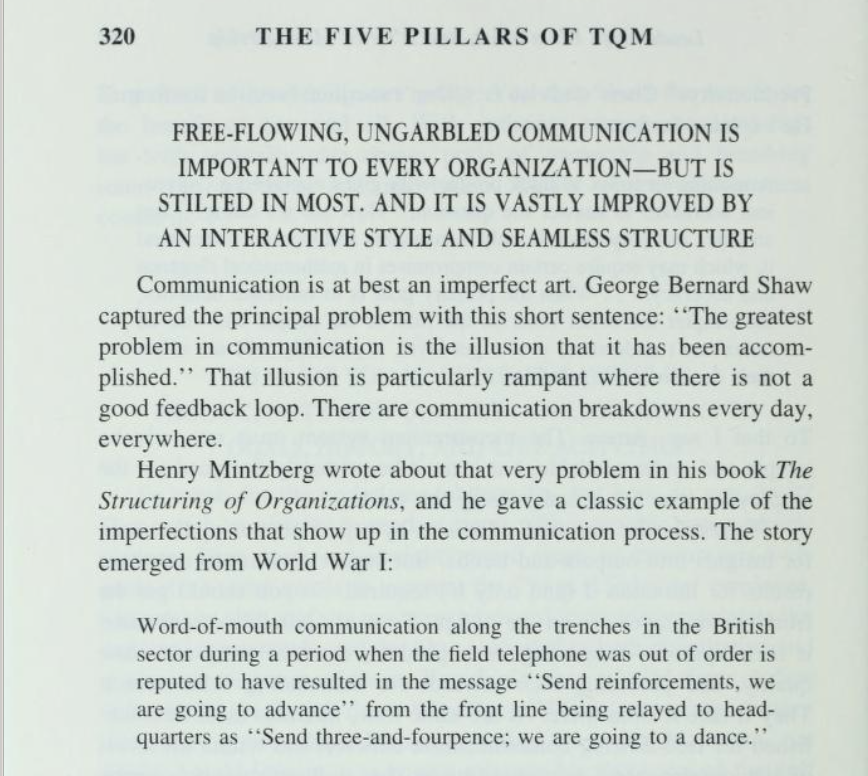
Per Quote Investigator “The linkage of the statement to George Bernard Shaw appears to be spurious.” Indeed.
The Illusory Truth Effect
I’m not a person to Well Actually every quote people like to trot out but this example is so perfectly on the nose it’s impossible not to love it. The connection between literary icon George Bernard Shaw and this quote has been repeated so often and for so long now that it’s become canon in most people’s minds.
This is the ‘illusory truth effect’ - basically the effect of continued repetition. This is why the mass distribution effects of social media networks have enabled mass delusion, and why they’re such effective machines for propaganda. Hear a thing enough times and you’ll believe it. Peddlers of disinformation leverage the scale of social media to ensure that their false narrative comes at you ten times a day from five different directions.
When I worked at Storyful, we knew that verifying or debunking news rapidly was critical because, as another famous quote goes: “A lie gets halfway around the world before the truth can get its pants on”
That quote is often attributed to Mark Twain and Winston Churchill but as you’d expect, there’s no proof either of them said it either. I’m not sure why it’s quotes that get at misinformation that seem to be the fakest of news, but that’s an investigation for another time.
Artificial Intelligence and Ilusory Authenticity
We’re at a point in human existence where it is fast becoming impossible to discern reality from what’s artificial, and obviously I use that word very deliberately here. AI isn’t helping matters. Stunningly vivid fiction is easier than ever to create, in all forms. We can barely trust our eyes, let alone what the algorithm serves us up on Linkedin. I could list and link you 20 examples of neu-fakery here, but you’ve already seen 20 of your own, personalized to your browsing behavior. We’re already passing the point of acceptance of that content, to broader recognition of what AI slop looks like, and rejection of it out of hand. The younger generations are getting to grips with it faster than us olds, thankfully.
But authenticity is everything. Authenticity is trust. And when authenticity is as illusory as truth, we all have to continue to work hard to demonstrate that what you do and say and create and share is authentic, because eventually some tenacious might well dig out the truth if you’re bluffing or careless or reckless about what’s real and what’s not, and scupper your authenticity in the process. And that means doing due diligence on what you consume.
As a journalist, checking your quotes is something that’s drummed into you. Check the accuracy, check the context, check that you had permission to legally record and that it was clearly on the record. The journalism graveyard is filled with the corpses of careers of people who misquoted somebody to their peril. Worst case it gets you sued. Medium case you lose trust and credibility. Best case it tips into the void, heard by no-one other than a bot.
The old adages apply more than ever. Check what you share. Check it again. If it seems too perfect, it probably is.